How Real-Time Matka Result APIs Help Apps Deliver Instant Results
In today's digital world, users expect websites and mobile applications to provide updated information without unnecessary delays. Whether someone is checking a live dashboard, viewing the latest published results, or refreshing a website, slow updates can create a frustrating experience.
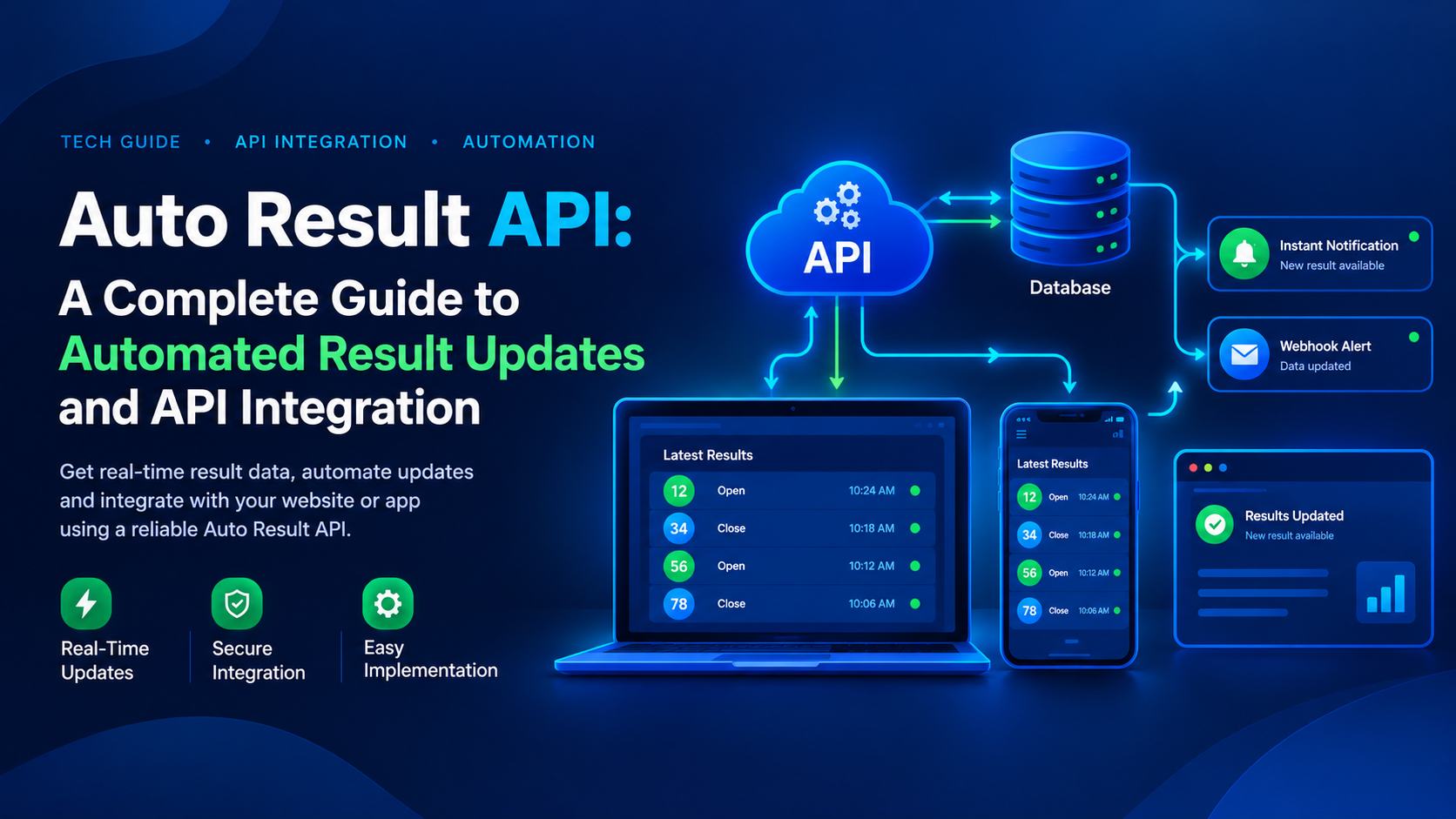
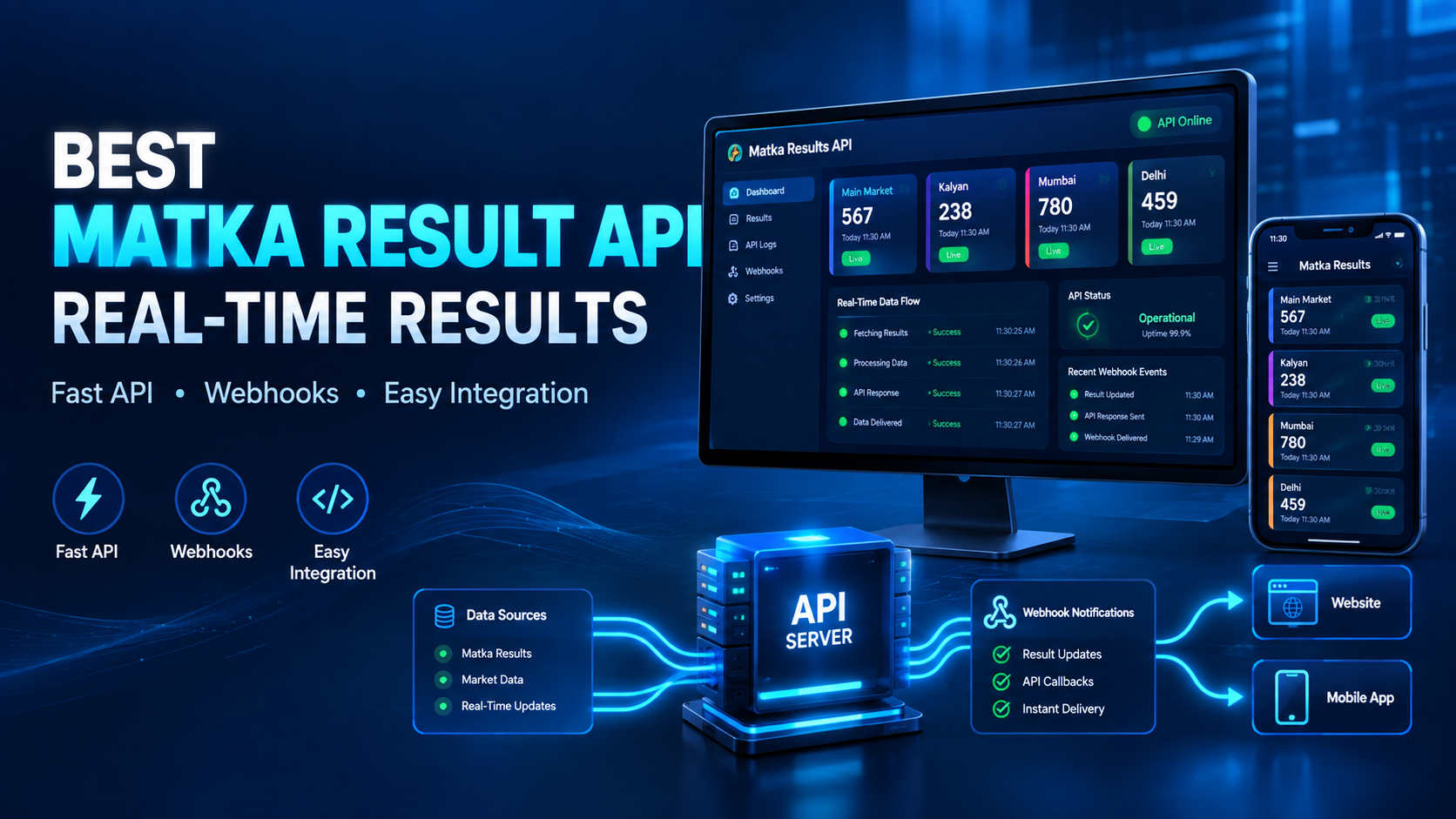
This is where a real-time Matka Result API can make a difference. It allows compatible applications and websites to retrieve result data from an API provider and display the latest available information without depending entirely on manual updates.
For developers building result-display platforms, automated data delivery can simplify daily operations, reduce repetitive tasks, and make it easier to manage information across different pages and applications.
In this article, we will explain how real-time result APIs work, why they matter, and how API integration and webhooks can help developers build more responsive applications.
What Is a Real-Time Matka Result API?
A Matka Result API is a software interface that allows an application or website to request structured result data from an API service.
Instead of manually entering information into every page, developers can connect their software to an API and process the returned data automatically.
Depending on the provider and its supported services, an API may offer:
- Structured result data in JSON format
- Market names and result categories
- Result publication timestamps
- API endpoints for retrieving available records
- Webhook notifications for supported updates
- Documentation for developers
- Integration options for websites and mobile applications
A real-time API aims to deliver new information as soon as it becomes available from its source. However, actual delivery speed depends on the source, verification process, network conditions, and API infrastructure.
For this reason, developers should always check how a provider collects, verifies, and publishes its data before integrating the service into a live application.

Why Instant Result Updates Matter for Apps and Websites
Users generally expect information to be available when they open an application. If a website displays outdated results or requires frequent manual refreshing, it can affect usability and create extra work for administrators.
A well-designed result API can help address these problems in several ways.
1. Faster Data Delivery
An API allows an application to request the latest available data directly from a configured endpoint. This removes the need to manually copy and paste every update.
When the provider publishes new information promptly, the connected application can retrieve and display it with less delay.
2. Reduced Manual Work
Manual data entry takes time, especially when a website displays information from multiple sources or categories.
With an automated integration, the application can process structured responses and update the relevant sections according to its configured rules. Administrators can spend less time on repetitive tasks and more time maintaining the platform.
3. Consistent Information Across Platforms
Some businesses operate both a website and a mobile application. Maintaining separate result records for each platform can create unnecessary duplication.
A shared API integration can allow both platforms to use the same data source, helping keep their displayed information consistent.
4. Better User Experience
Clear timestamps, organised result tables, responsive pages, and timely updates can make an application easier to use.
The API itself is only one part of the experience. The website or app must also handle loading states, network errors, and unavailable data properly.
How Does a Real-Time Result API Work?
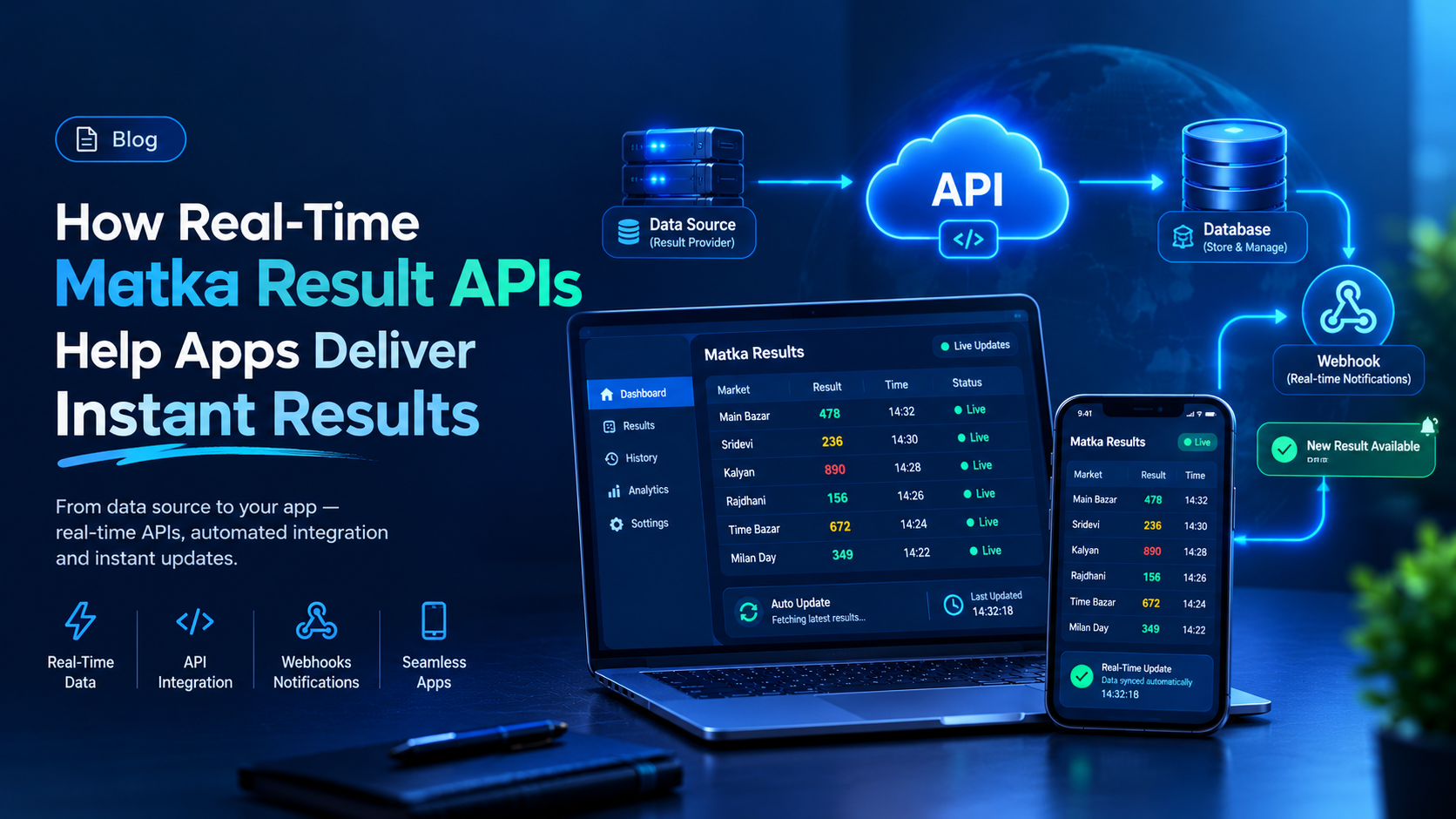
The basic process is straightforward. A provider makes structured data available, and a connected application retrieves and displays it according to its own design.
Step 1: Data Is Received From a Source
The API provider obtains information from its configured data sources. The reliability of this step depends on source availability, data quality, and the provider's collection process.
Step 2: Data Is Processed
The system processes the incoming information and prepares it in a structured format. Depending on the service, this can include normalising field names, associating timestamps, and checking records for errors.
Step 3: The API Makes Data Available
The application sends a request to an API endpoint using the required authentication and parameters. If the request is valid, the API returns the available data in its documented format.
Step 4: The Application Displays the Information
The website or mobile app processes the response and updates the appropriate screen or database. Developers can decide how the information should appear to users.
Step 5: Updates Are Delivered or Retrieved
The application can periodically request new data or receive webhook notifications if the provider supports them. The chosen method depends on the provider's capabilities and the application's technical requirements.
It is important to understand that an API cannot guarantee instant results if the original source has not published an update or the data is still being verified.
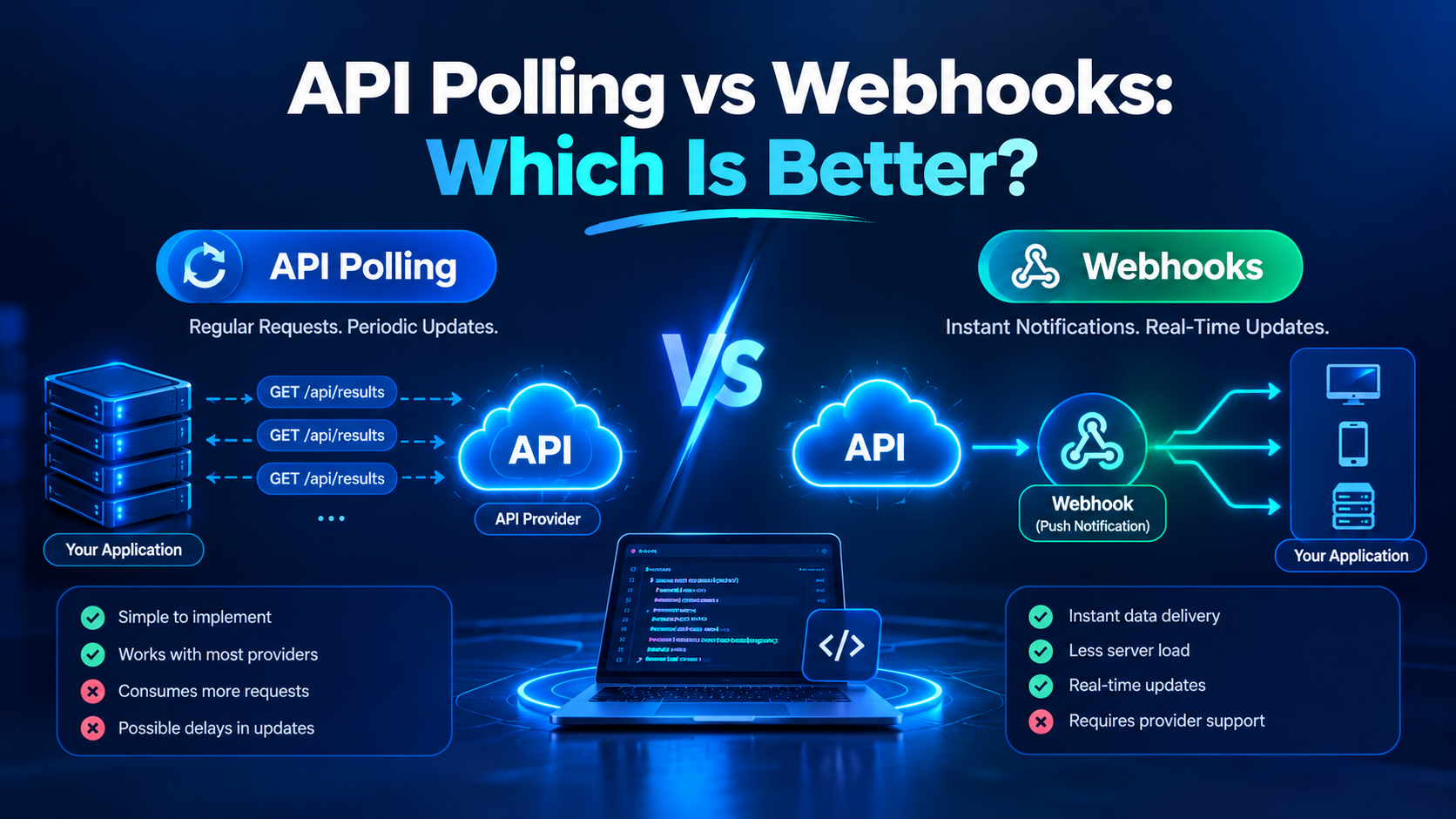
API Polling vs Webhooks: Which Is Better?
One important decision when building an automated result system is how the application will learn about new data.
Two common approaches are API polling and webhooks.
| Feature | API Polling | Webhooks |
|---|---|---|
| How it works | The app periodically requests updates | The provider sends a notification when an event occurs |
| Network requests | Repeated requests | Event-based notifications |
| Update handling | Depends on polling frequency | Depends on event delivery and processing |
| Main requirement | Scheduled API requests | A secure webhook endpoint |
| Best suited for | Periodic checks and simple integrations | Event-driven update workflows |
Understanding API Polling
With polling, the application requests data at a configured interval. For example, a system might check for updates every 30 seconds, depending on the provider's limits and the application's needs.
Polling is relatively easy to implement. However, frequent requests can increase API usage and may return the same data repeatedly when nothing has changed.
Developers should follow the provider's rate limits and avoid excessively frequent requests.
Understanding Webhook Notifications
A webhook allows a provider to send an HTTP notification to a registered endpoint when a supported event occurs.
For example, when a new record becomes available, the provider may send a notification containing an event identifier and relevant information.
The receiving application can then validate the notification, process the event, and update its database or interface.
Webhooks can reduce unnecessary polling, but they must be implemented carefully. Secure verification, retry handling, duplicate-event protection, and logging are important for dependable operation.
For many applications, a combination of webhooks and occasional API checks provides a practical balance.
Important Features to Look for in a Matka Result API Provider
Choosing an API provider involves more than checking how quickly its endpoint responds. Developers should evaluate the complete service, including documentation, data quality, reliability, and support.
1. Clear and Updated Documentation
Good API documentation explains the available endpoints, authentication method, request parameters, response format, and error codes.
It should also include practical examples so developers can understand the integration process without unnecessary confusion.
2. Structured and Consistent Data
Consistent data formats make it easier to integrate information into an existing database or application.
Developers should check whether fields remain consistent between responses and how the provider handles missing, corrected, or delayed records.
3. Reliable Service Availability
API availability matters when a website depends on an external service. Frequent outages or slow responses can affect the application's ability to show updated information.
Review published uptime figures, service-level commitments, maintenance policies, and available monitoring tools instead of relying only on marketing claims.
4. Webhook Support
Webhook support can simplify event-based workflows by notifying an application when a supported update occurs.
Before choosing a provider, confirm whether webhooks are available for the required data, how delivery failures are handled, and whether notifications can be securely verified.
5. Secure API Access
An API should use appropriate authentication and encrypted connections. Access credentials must be stored securely and should not be exposed in public-facing website code.
Applications should also validate incoming data, restrict unnecessary access, and maintain useful logs for troubleshooting.
6. Technical Integration Support
Even well-documented APIs can require troubleshooting during implementation.
Responsive technical support can help developers understand authentication issues, response errors, webhook configuration, and integration requirements.

How Real-Time APIs Can Support Multiple Markets
Applications that display information across multiple categories need a consistent way to organise their records.
For example, a provider may support different market names, including Kalyan, Milan, Sridevi, Time Bazar, Madhur, and Main Bazar. Availability depends on the provider's actual data coverage.
A multi-market API can help developers organise records using fields such as:
Market identifier
Market name
Result value, where applicable
Publication date and timestamp
Record status
Last-updated information
The exact fields and supported markets vary by service. Developers should confirm the available coverage and data rights before building their integration around a specific provider.
For platforms displaying information associated with regional markets, accurate labels and timestamps are especially useful. They help users understand which record they are viewing and when the information was published.
Common Challenges When Integrating a Result API
API integration can save time, but it does not eliminate every technical problem. A reliable implementation should account for situations where data or services are temporarily unavailable.
Delayed Source Updates
An API may respond quickly while still returning older information because its original source has not published a new record.
What to do: Display the publication timestamp and distinguish between the time a record was published and the time it was retrieved.
API Timeouts and Network Errors
Temporary connectivity issues can prevent an application from receiving a complete response.
What to do: Implement reasonable timeouts, controlled retries, and error logging. Avoid retry loops that place excessive load on the service.
Duplicate Webhook Events
Webhook providers may retry notifications when they do not receive a successful acknowledgement.
What to do: Use event identifiers or another suitable idempotency mechanism so the same event is not processed repeatedly.
Incorrect or Inconsistent Records
Data may occasionally contain missing fields, unexpected formats, or corrections.
What to do: Validate incoming responses and define a process for handling corrected records. Do not assume every successful HTTP response contains valid business data.
High Request Volumes
Applications with many users may generate large numbers of requests, especially when every page independently polls the same endpoint.
What to do: Consider caching, controlled refresh intervals, request limits, and shared server-side data retrieval where appropriate.
These steps help make an integration more predictable and easier to maintain over time.
Best Practices for Building a Reliable API Integration
Developers can improve the performance and maintainability of an application by following a few basic practices.
Use the documented API version. Check the provider's current documentation before implementing endpoints, authentication, or response parsing.
Cache data appropriately. Caching can reduce repeated requests, but the refresh policy should reflect the provider's update frequency and the application's requirements.
Validate every response. Check the response structure, required fields, timestamps, and status codes before updating records.
Secure credentials. Keep private API keys on the server side and use appropriate access controls.
Monitor performance. Track response times, request failures, webhook delivery, and the age of the latest available record.
Design for temporary failures. Show a clear status message when fresh data is unavailable rather than silently presenting outdated information as current.
Test before launch. Use a test environment where available and verify normal responses, missing fields, authentication failures, timeouts, and duplicate notifications.
Following these practices helps developers create a more stable application without relying on unrealistic promises about speed or uninterrupted service.
How Matka Result API Services Help Developers Save Time
Building every data retrieval and update mechanism from scratch can add complexity to a software project.
Using an established API may simplify the process by providing a documented interface, structured responses, and existing update mechanisms. Developers can then focus on their application's interface, database design, performance, and user experience.
For example, a developer building a result-display website may need to:
Connect the application to the selected API.
Configure authentication and supported endpoints.
Process the returned records.
Display the information in the appropriate sections.
Configure webhooks or scheduled updates if available.
Monitor errors and verify that displayed records remain accurate.
The amount of work saved depends on the provider's documentation, data format, available features, and the application's existing architecture.
A straightforward API can make integration easier, but testing and maintenance are still necessary.

Why Choose Matka Result API for Your Integration?
Matka Result API presents its service around result-data access, API integration, automated updates, and developer support.
For businesses evaluating matka-result-api.com, useful points to verify include:
API documentation: Whether endpoints and response formats are clearly explained.
Market coverage: Whether the required markets and categories are supported.
Update frequency: How quickly source information becomes available through the API.
Webhook availability: Whether event-based notifications are included in the selected plan.
Service reliability: What uptime information and monitoring options are provided.
Pricing: Whether request limits, features, and support are clearly defined.
Integration assistance: Whether technical help is available during setup and troubleshooting.
Before integrating any third-party data service, businesses should independently verify data accuracy, source permissions, applicable laws, and the provider's terms of service.
The best choice is a service that meets the application's actual technical requirements and communicates its limitations clearly.
Frequently Asked Questions (FAQs)
1. What is a real-time Matka Result API?
It is an API that allows compatible applications and websites to retrieve available result data from a configured provider. The freshness of the data depends on the source and the provider's update process.
2. How does a Matka Result API help a website?
It can reduce manual data entry, provide structured responses, and help a website retrieve updated information through automated requests.
3. What is the difference between an API and a webhook?
An API commonly allows an application to request data when needed. A webhook sends a notification to a configured endpoint when a supported event occurs.
4. Is API integration difficult?
The complexity depends on the API design, programming language, authentication requirements, and the existing application. Clear documentation and suitable integration support can make the process easier.
Conclusion
Real-time APIs can make data delivery simpler for applications that need to retrieve and display frequently updated information. By combining structured responses, sensible caching, secure API access, and webhook notifications, developers can reduce manual work and build more responsive websites and mobile apps.
However, fast API responses alone do not guarantee fresh or accurate data. Source reliability, verification processes, timestamps, and proper error handling are equally important.
If you are evaluating a result API for your software project, review its documentation, test the available endpoints, confirm its supported data coverage, and check the integration requirements before deployment.
Matka Result API is a service to evaluate for projects that require structured result data and automated integration. Choose an implementation that prioritises accurate information, secure access, transparent update timing, and maintainable software.